Coupon Discount Caps: Calculate the Real Saving Before Checkout
A percentage-off coupon can stop saving you money before you stop adding products. The reason is often a maximum discount: the rate applies only until the reduction reaches…

In this guide
A percentage-off coupon can stop saving you money before you stop adding products. The reason is often a maximum discount: the rate applies only until the reduction reaches a fixed amount. Understanding that ceiling helps you compare offers, explain an unexpected checkout figure and avoid building a larger basket for a saving that has already stopped growing.
The quick takeaway: Find the eligible subtotal, calculate the percentage reduction and apply the stated maximum. Then compare complete payable totals. Once a coupon reaches its cap, adding more eligible products does not increase that coupon’s reduction under the same calculation.
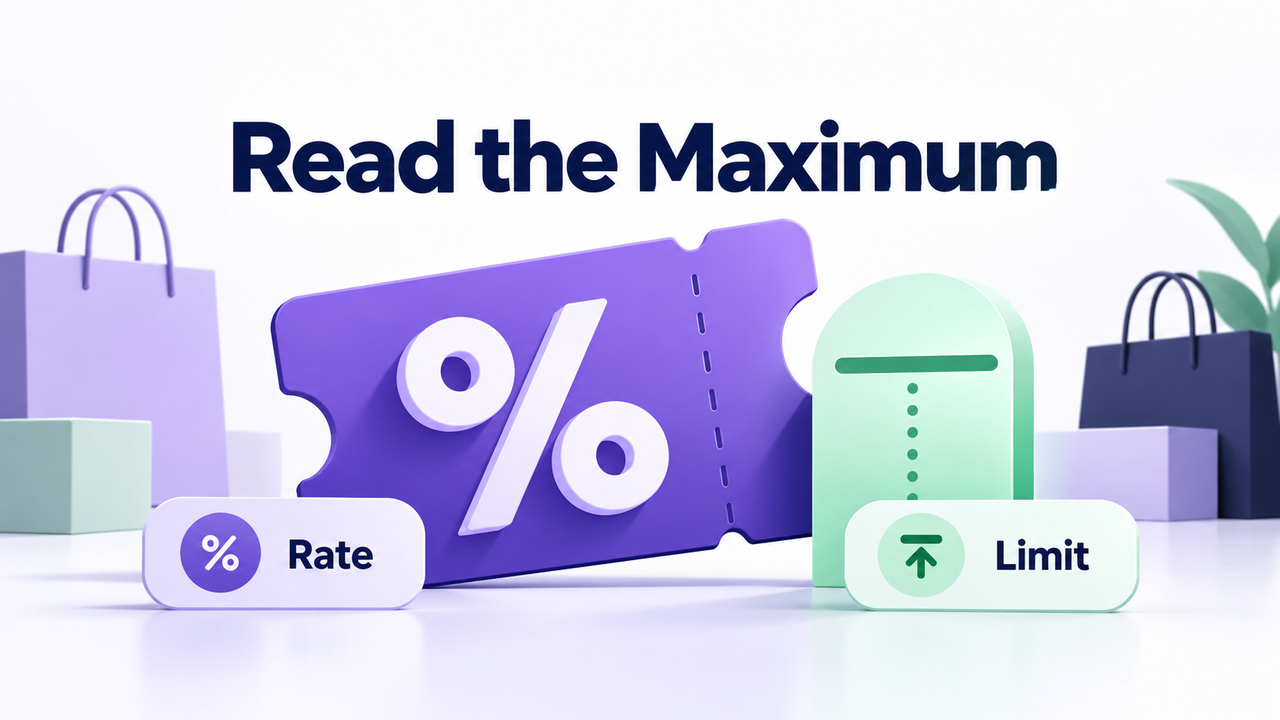
Read the maximum as a ceiling, not a spending target
A rate and a cap answer different questions. The rate tells you how the reduction grows with eligible spending. The cap tells you where that growth stops. Neither tells you how much you need to buy.
For a straightforward percentage coupon, the calculation is: coupon reduction = the smaller of the percentage reduction and the maximum discount. This assumes the offer has no additional tiers or special calculation rules. Always read the actual terms before using that model.
Consider a hypothetical coupon offering 20% off eligible items, limited to $30. On an $80 eligible subtotal, the percentage gives $16. On a $150 subtotal, it gives $30. On $220, the uncapped percentage would be $44, but the reduction remains $30.
The $150 point is a calculation boundary, not a recommendation to spend $150. If the products you need total $80, buying $70 of unwanted products to reach the maximum would increase the product amount payable from $64 to $120.
Calculate the effective saving on your basket
Above the cap, a percentage printed in a banner can be higher than the reduction expressed as a share of your eligible spending. To see the difference, divide the actual coupon reduction by the eligible subtotal.
Moving from the second row to the third means adding $70 and paying $70 more. The coupon is still useful on the original planned purchase, but it gives no extra reduction on those additional products in this example.
Do not confuse a maximum discount with a minimum spend. A minimum determines whether an offer can apply at all; a cap limits how much it can deduct. An offer can have both, either or neither. A basket can satisfy its minimum and still receive less than the headline percentage because it has reached the cap.
Check which amount the percentage actually uses
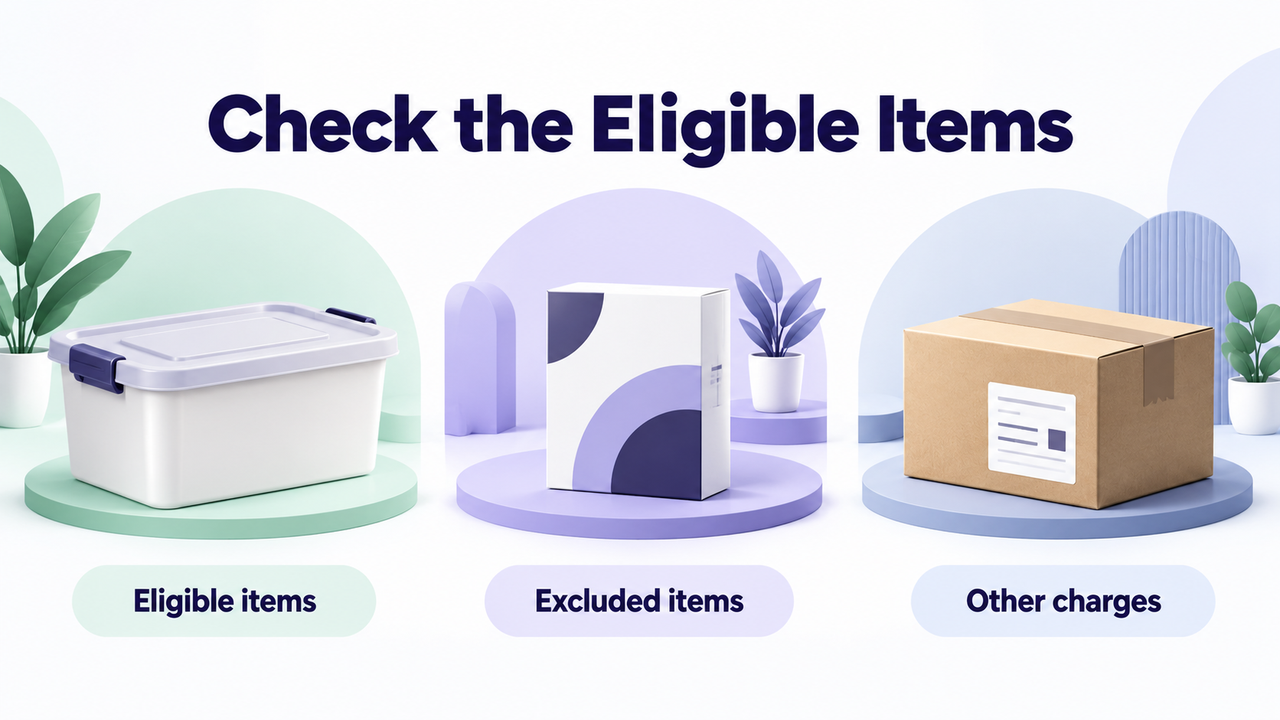
A checkout total can include products the coupon excludes, shipping and other charges. Applying the percentage to that total can produce the wrong expectation even when the cap has not been reached.
Make a small calculation note with four entries: eligible products, excluded products, charges outside the coupon and the reduction displayed. If the terms explain how another promotion changes the eligible base, include that step rather than assuming every deduction starts from the original price.
This distinction matters when a cart contains several sellers or product categories. A product’s appearance beside eligible products is not evidence that its price belongs in the calculation. Check its own eligibility and the order breakdown.
A current example of a stated discount cap
As checked on 25 October 2026, eBay’s official SHOPNOW15 terms advertise 15% off eligible purchases from participating sellers, capped at $350, with no minimum purchase. The stated end is 1 November 2026 at 11:59 p.m. Pacific Time, or while supplies last.
That is a campaign-specific example, not a worldwide eBay entitlement. Its marketplace, registered-address, seller, category, payment and redemption restrictions still apply. Shipping, handling and taxes are outside the percentage calculation. Read the terms and participating-seller list, then confirm the deduction in your own checkout. We have not redeemed the code or verified eligibility for an individual account.
The useful lesson is that a genuine percentage offer can have a genuine ceiling. A smaller-than-expected reduction does not by itself prove that a code is broken; first identify the eligible base and whether the maximum has been reached.
Compare competing coupons on the purchase you need
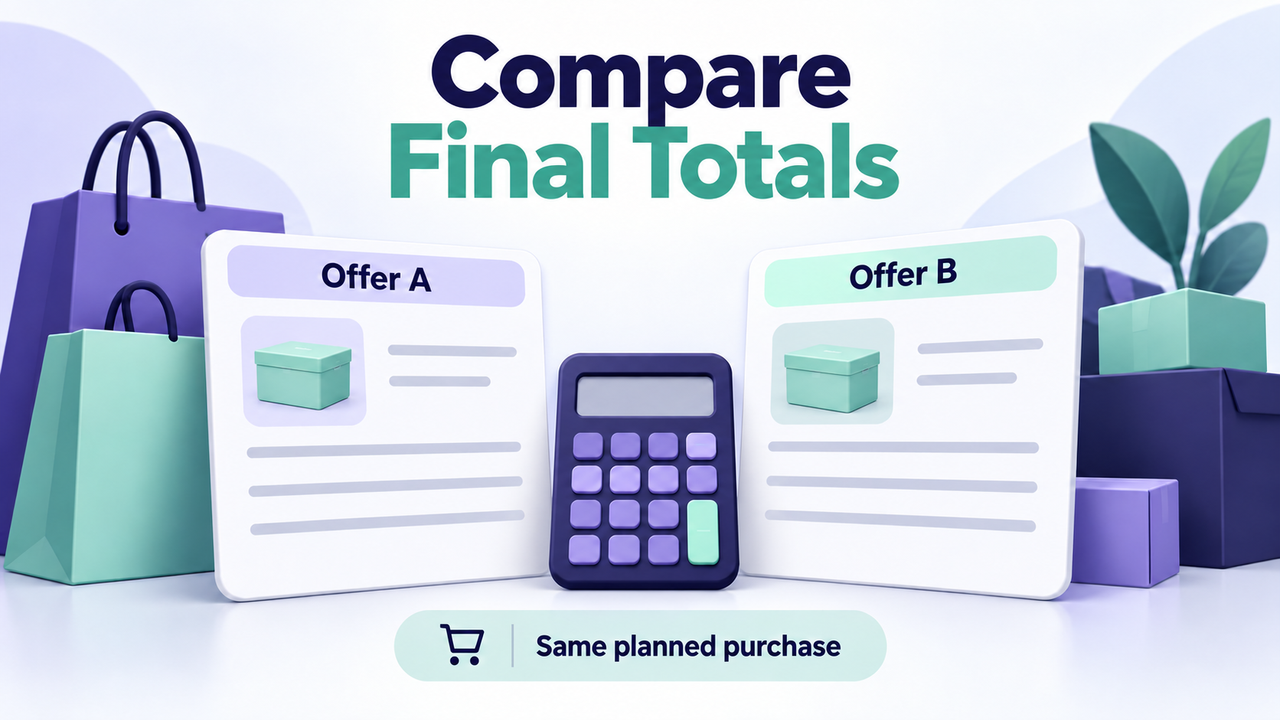
The larger advertised percentage is not always the better option. Compare each offer against the same planned products and complete cost. Do not add their reductions together unless the actual terms expressly permit combining them.
At a $300 eligible subtotal, both would deduct $30. Below that point, the result depends on the subtotal; above it, the uncapped 10% reduction grows beyond $30. This is a comparison of invented offers, not permission to split transactions or bypass a retailer’s limits.
Also keep fulfilment costs in view. If choosing an offer changes delivery charges, the better product-price deduction may not produce the lower final payment. Compare a workable purchase plan, including quantities you will use, rather than trying to maximise the coupon line.
A final calculation before payment
- Identify eligible products and any minimum spend.
- Find the percentage and maximum discount in the terms.
- Calculate the reduction on the correct base, allowing for the retailer’s rounding rules.
- Compare alternative offers on identical products and quantities.
- Include charges outside the coupon and confirm the final checkout figure.
Common questions
Should I spend more to reach the cap?
Only consider additional products you already need. Reaching the maximum reduction is not a goal that justifies an unnecessary purchase.
Does a $30 maximum mean I receive $30 on every order?
No. It is a ceiling. A percentage calculation below $30 produces a smaller reduction, subject to the offer’s other conditions.
What if my calculation differs by a few cents?
Check the eligible base, whether rounding occurs per item or across the order, and any other promotion. Use the retailer’s actual breakdown rather than assuming a universal rounding method.