Amazon Resale Electronics: Check Missing Accessories Before You Buy
A lower Amazon Resale price can hide a second shopping task: finding the charger, adapter or other part needed to use the item. Cosmetic wear, damaged packaging and…

In this guide
A lower Amazon Resale price can hide a second shopping task: finding the charger, adapter or other part needed to use the item. Cosmetic wear, damaged packaging and missing equipment have very different consequences. Before choosing a used electronics offer, translate its condition note into a complete working setup and compare that setup with the alternatives.
The quick takeaway: Read the individual condition description, establish exactly what is included, and price any essential replacement parts before ordering. Accepting a scratch is a preference; accepting an unresolved power or compatibility problem can make the item unusable.
Start with the individual offer
Amazon’s official Amazon Resale explanation describes used and open-box products that Amazon inspects and grades. It says shoppers can find offers through the Resale storefront or through used-buying options on a regular product page. This guide uses that Amazon.com explanation, checked on 26 October 2026; local programmes and terms can differ.
The product’s main page explains the model. The individual used offer explains the particular item being sold. Keep those two layers separate. A manufacturer’s description of the original retail package does not, by itself, establish that every accessory remains in a used offer.
Open the offer details and record its condition note, seller, dispatch arrangement and included parts. If several offers appear under one product, compare each description separately. A lower price can correspond to a different compromise, rather than a better price for an identical package.
Amazon Outlet and Amazon Resale should not be treated as interchangeable buying instructions. Our Amazon Outlet guide covers evaluating an outlet listing. The additional task here is establishing the completeness and practical suitability of an individual used item.
Translate the grade into practical checks
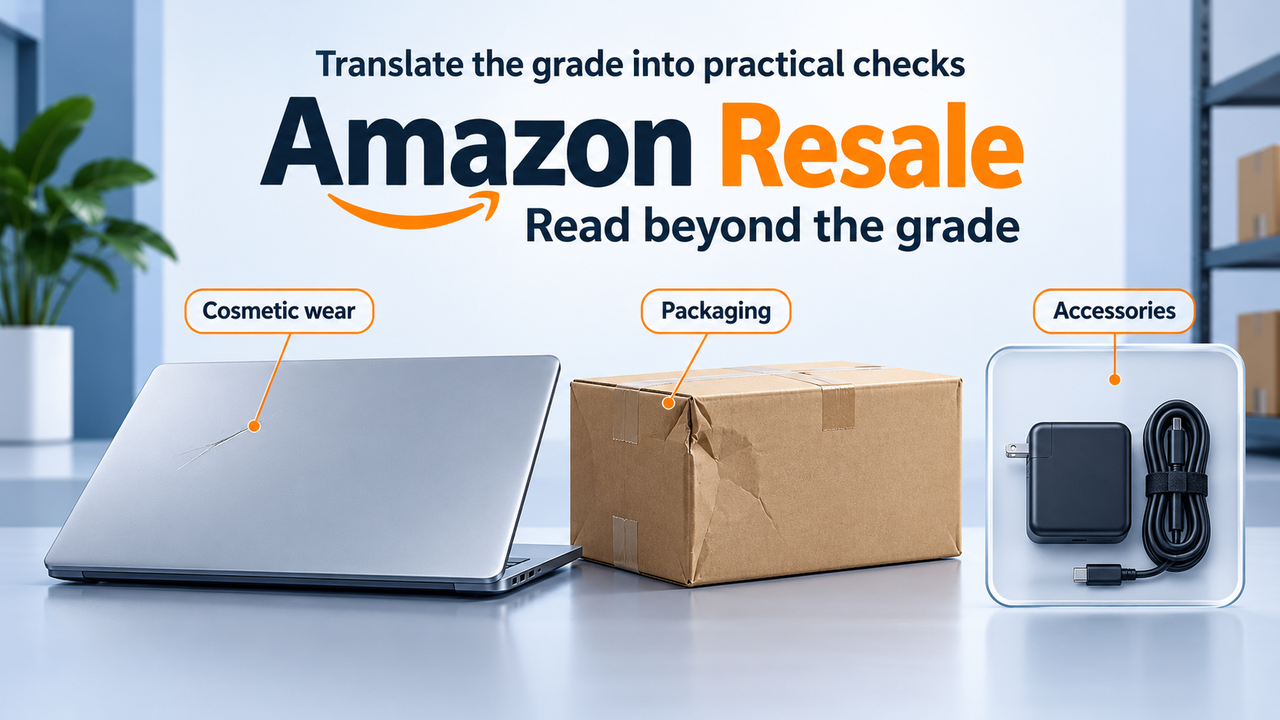
Amazon lists four Resale conditions: Like New, Very Good, Good and Acceptable. Its explanation allows different degrees of wear and packaging damage. Some grades can also involve missing accessories or parts; the individual description identifies omissions. Do not use the grade as a substitute for reading those details.
Sort the description into three questions. First, what affects appearance? A visible scratch may be acceptable on equipment that sits under a desk. Second, what affects the package? A damaged box may matter for a gift even when it does not matter for personal use. Third, what affects operation? A missing essential part creates an additional requirement before the product can do its job.
Write your own acceptance limits before comparing prices. You might accept marks on a laptop lid but require an undamaged screen, the correct keyboard layout and a documented power solution. Someone buying the same model as a presentation gift may reach a different decision.
Also distinguish an explicit statement from silence. “Packaging damaged” identifies a packaging issue; it does not answer a separate question about a specialised adapter. If a missing or unclear detail could change your decision, seek clarification through the official listing or support route before paying.
Price a complete working setup
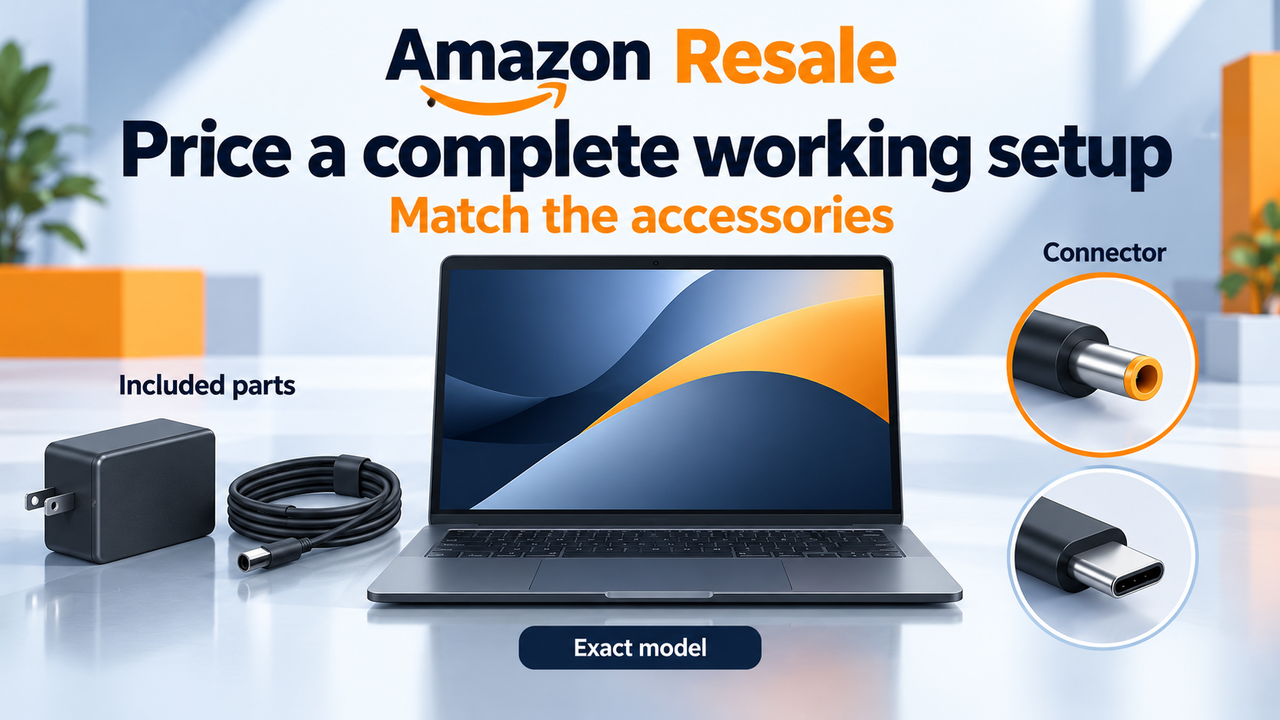
Make a parts list based on your intended use. For a laptop, that may include its power supply and any adapter needed for your existing display. For a monitor, it may include the stand, power supply and the correct video cable. These are examples of checks to make, not claims that a particular Resale listing omits them.
Use the exact model number when looking up replacements. A connector that appears to fit is not enough evidence of electrical or functional compatibility. Consult the manufacturer’s requirements and use a suitable replacement from a credible source. If compatibility cannot be established, leave the replacement cost unresolved rather than assigning a convenient guess.
Check availability as well as price. An accessory that cannot arrive when needed may make a purchase unsuitable even if the eventual complete cost looks attractive. Avoid buying an incomplete device first and hoping a compatible part will turn up later.
Separate cosmetic wear from deal-breaking problems
Evaluate compromises in the order they can stop you using the product. Correct model and specification come first. Required components and compatibility come next. Cosmetic preferences follow once the practical requirements are satisfied.
For a laptop, verify that the selected offer matches the processor, memory, storage and layout you intend to buy. For a monitor, confirm the connections and mounting arrangement you need. A large discount on the wrong specification does not solve the original shopping problem.
Keep manufacturer warranty information separate from the retailer’s returns information. Read what applies to the actual used offer rather than borrowing a new product’s advertised coverage. If a specific guarantee is essential to your decision, confirm it before buying.
The useful question is how much you save on a complete, suitable alternative. If the difference becomes small after required parts, a complete new package may be preferable. If the saving remains meaningful and the disclosed compromise is acceptable, a used offer can still be a sensible choice.
Inspect the delivery before discarding packaging
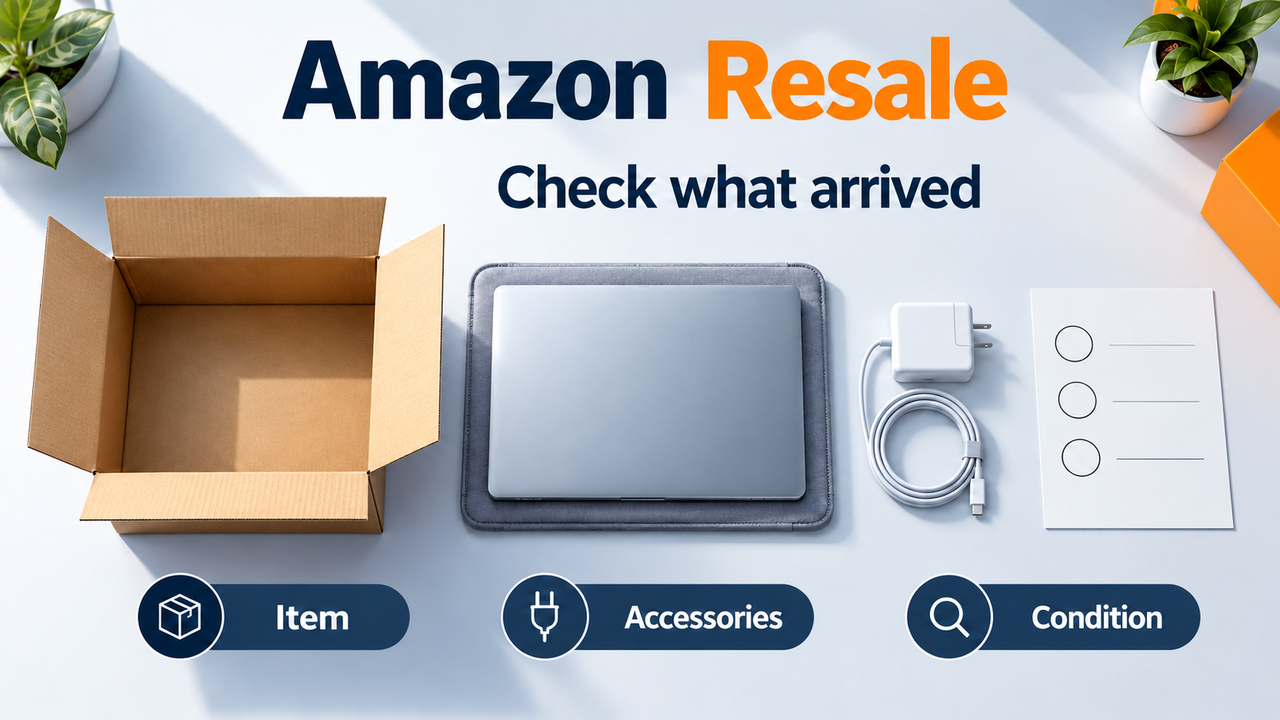
Retain the offer description and order confirmation. On arrival, compare the model and contents with that record, check the condition and follow the manufacturer’s setup instructions. Keep packaging until you have completed a reasonable initial check.
For electronics, check the functions relevant to your purchase: charging, the display, intended connections and any included controls. Do not open sealed internal components or attempt repairs just to investigate a discrepancy. Record a missing part or an unexplained problem and use the official order support process.
Amazon says Resale purchases fall under its returns policy, but an exact replacement in the same condition may not be available. Check the return information and deadline for your own order. Do not build a time-sensitive purchase around the assumption that another identical used item can be supplied immediately.
A decision checklist for the exact item
- Match the model, specification and selected offer.
- Read the full condition description and included-parts information.
- Resolve essential accessory compatibility before ordering.
- Compare complete costs with a suitable used and new alternative.
- Confirm relevant return and warranty information separately.
- Keep the description and inspect the delivered contents promptly.
Common questions
Is the cheapest used offer necessarily the best value?
No. Missing parts, different specifications and an unacceptable condition can outweigh its lower item price. Compare complete setups that meet the same need.
Can I rely on the main product photo to identify included accessories?
Use the individual offer’s description. The original retail-package illustration does not settle what remains in a particular used item.
Should I order if an essential accessory is not clearly described?
Resolve the uncertainty first. If you cannot confirm what is included or obtain a suitable replacement at a known cost, you cannot make a reliable complete-price comparison.