Amazon Subscribe & Save Coupons: Compare the First Delivery With Repeat Orders
An Amazon coupon can make the first Subscribe & Save delivery attractive without making the next delivery the best choice. The introductory reduction, the subscription discount and the…

In this guide
An Amazon coupon can make the first Subscribe & Save delivery attractive without making the next delivery the best choice. The introductory reduction, the subscription discount and the price of the product are separate parts of the decision. Before setting up repeat orders, compare what arrives today with what you would be willing to pay when the introductory offer is gone.
The quick takeaway: Record the first-delivery total, evaluate a repeat delivery without assuming the coupon returns, and choose a schedule based on consumption. Review the next order before the change deadline shown in your account.
Identify which saving belongs to which delivery
On an eligible listing, distinguish the one-time purchase option from Subscribe & Save. Then read the coupon separately. A subscription discount describes the recurring arrangement; an introductory coupon can have a narrower scope. Neither label tells you the complete amount you will pay.
Amazon’s US explanation of Subscribe & Save for sellers describes subscription-specific coupons redeemable on the first delivery of a new subscription. That explains why a first-order price can be lower than a later one. It does not establish that every listing has a coupon, that every account qualifies or that a used offer will become available again.
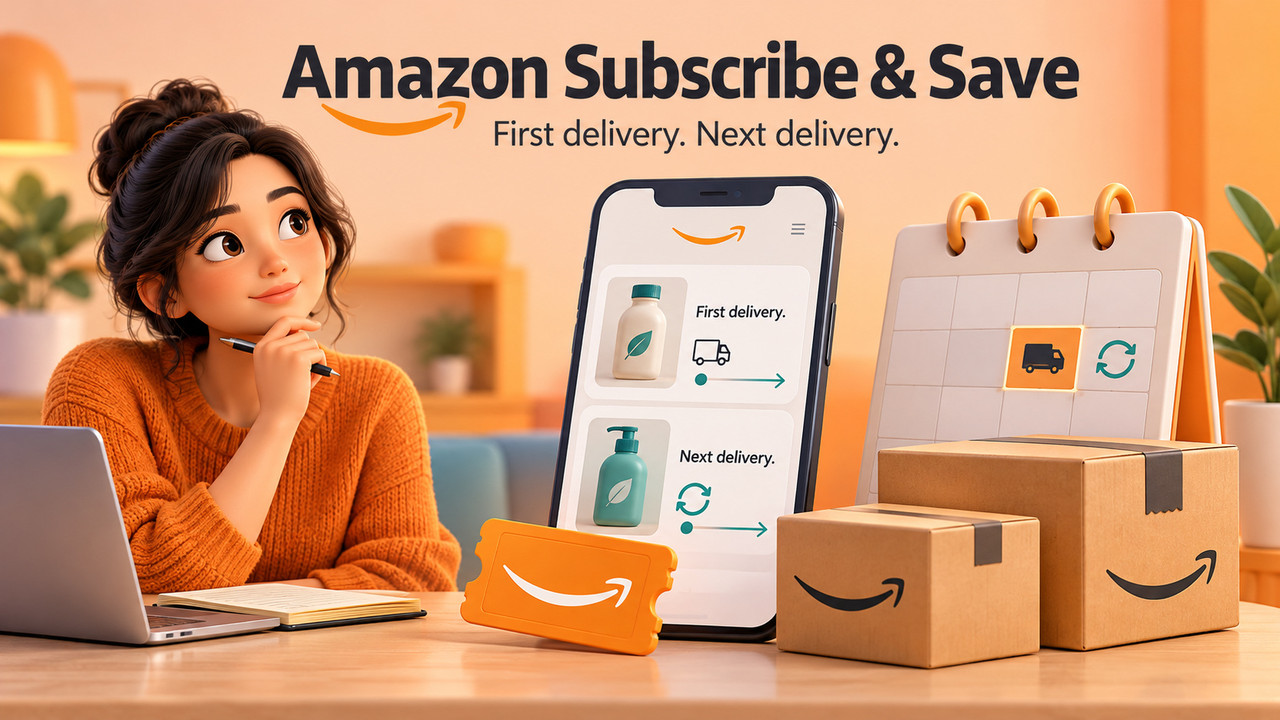
Make a small record with three entries: the offer’s eligibility wording, the first order’s net product amount and the recurring arrangement shown. If the terms mention a new subscription or first delivery, do not copy that reduction into every future month of your budget.
For the basic activation step, use our guide to checking Amazon coupons before checkout. The additional decision here is whether repeated purchases still suit you after the introductory saving.

Compare the same product across a realistic buying period
Choose a period that reflects how often you actually replenish the item. Three deliveries can reveal a misleading first-price comparison without pretending that you can predict a whole year’s prices. Match the variant, pack size, seller and total quantity in both alternatives.
Use complete checkout amounts when comparing real offers. If a delivery charge, tax or account-specific condition changes one option, include it. Do not add advertised percentage discounts together yourself: inspect the actual order breakdown and the terms explaining what each reduction applies to.
If you need only one pack, do not manufacture a three-pack requirement to make the spreadsheet look balanced. Decide whether a recurring service fits that purchase at all. An appealing first order is not evidence of an ongoing need.
Set the schedule from usage, not the coupon
Start with how much usable stock you have and how quickly you finish it. A 60-count pack used at roughly one unit per day lasts about 60 days; deliveries every 30 days would add stock faster than that simple pattern consumes it. This is a planning example, not a recommended schedule for a particular product.
Allow for travel, a change of preference and products you use irregularly. A spare pack can be useful; several unopened packs can tie up money and storage. If the product is unfamiliar, try a suitable quantity before treating repeated deliveries as a routine.
Also separate convenience from savings. You may prefer scheduled replenishment even when a one-time purchase is slightly cheaper. That is a reasonable preference if you recognise the difference and can afford it. Calling every convenient subscription the cheapest option makes later reviews less useful.
Do not subscribe to extra products merely to chase a larger advertised discount tier. Evaluate the total spending and the usefulness of every added item. A lower percentage applied to a basket you need can be better than a higher percentage applied to unnecessary stock.
Review the next shipment as a fresh purchase
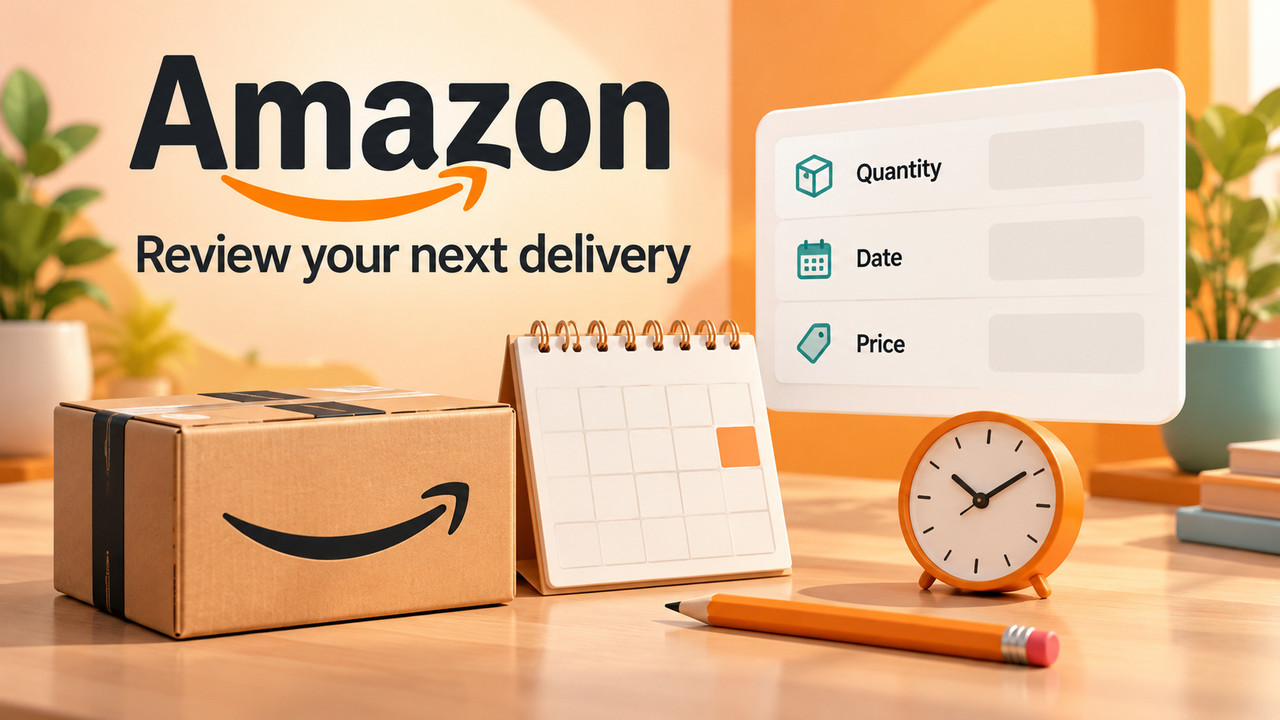
Open the subscription in the Amazon marketplace where you placed it and check the next quantity, date and amount available for review. Compare those details with your remaining stock and an equivalent one-time option. The screenshot from your first checkout is a record of that purchase, not proof of the next price.
Amazon’s UK consumer guide to Subscribe & Save explicitly explains that prices can rise or fall and temporary offers do not lock in a permanent price. Its UK account instructions also describe schedule changes, skipping and cancellation. Marketplace terms and controls can differ, so use your local subscription details rather than treating the UK guide as a worldwide policy.
For the UK process described there, cancelling the next shipment requires acting before the displayed last day to update the order. A cancellation after processing starts may affect later deliveries instead. For your own order, check both the subscription status and any order already being prepared.
After making a change, look for the confirmation and revisit the next scheduled delivery. Save that record if you might need support. Do not repeatedly create subscriptions to try to reset an introductory coupon; use only offers for which the stated terms make you eligible.
A short review before subscribing
- Match the exact variant and quantity with the one-time alternative.
- Identify whether the coupon applies only to the first delivery.
- Compare a realistic period without assuming future prices are fixed.
- Choose a frequency that fits actual use and available storage.
- Record the next review deadline and confirm any changes in the account.
A subscription earns its place in your shopping routine when the product, quantity, timing and complete price still work together. Reassess those four things at replenishment time rather than letting the first coupon make every later decision.
Common questions
Does clipping a coupon mean it applies to every delivery?
No. Read its scope. A coupon restricted to the first delivery should not be included in your calculation for later orders.
Should I buy more products to reach a subscription discount tier?
Only if the additional products belong in your planned purchases. Compare the complete amount spent and the quantity you will use, rather than the discount percentage alone.
Is cancelling the subscription the same as cancelling an order already processing?
Check both records. The UK guidance distinguishes changes made before the displayed update deadline from cancellation after processing has started. Use the instructions for your marketplace and order.